
Why Communication Skills Matter More Than Marks in Hospitality

Subhra Banerjee
Founder Encovate | Championing People Development in Hospitality
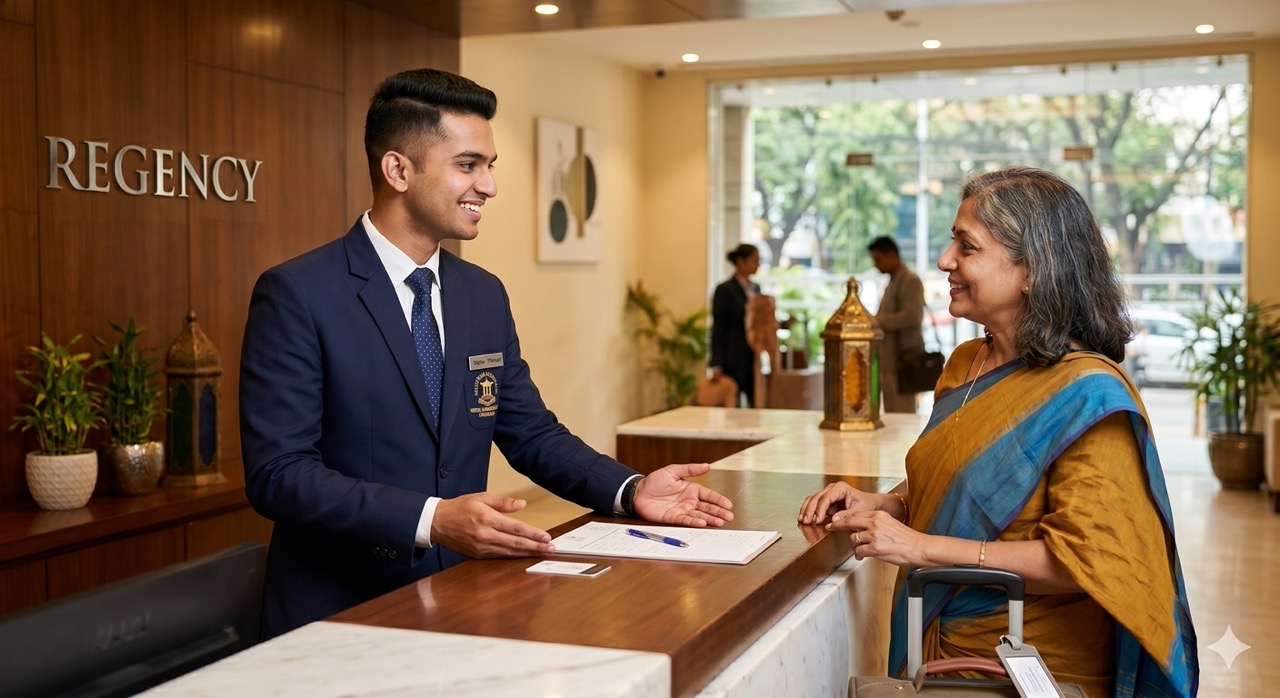
In hospitality, your marks may help you get shortlisted.
But your communication skills often decide how far you grow.
A hotel guest rarely asks:
“What were your grades in college?”
But they always notice:
- How confidently you speak
- How clearly you explain
- How professionally you handle situations
- How comfortable you make them feel
And that is the reality of hospitality.
Because hospitality is not just an operational industry.
It is a people industry.
Hospitality Is Built on Human Interaction
Every role in hospitality involves communication.
Whether you work at:
- Front Office
- Food & Beverage Service
- Housekeeping
- Sales
…you are constantly interacting with:
- Guests
- Managers
- Teams across departments
An employee who understands all technical terms but cannot communicate properly will still struggle in operations.
Meanwhile, someone with average academic performance but strong communication often grows faster because they can:
- Build guest trust
- Handle situations calmly
- Coordinate effectively
Communication Is More Than Speaking English
One of the biggest misconceptions students have is:
“Good communication means fluent English.”
Not necessarily.
Good communication in hospitality means:
- Listening carefully
- Speaking clearly and confidently
- Understanding guest emotions
- Choosing the right tone
- Being polite under pressure
- Handling concerns professionally
Sometimes, even a simple sentence delivered with warmth and confidence creates a better guest experience than perfect grammar.
Why Marks Alone Are Not Enough
Hospitality is an application-based industry.
You may score well in:
- Hotel accounts
- Food production theory
- Front office operations
- Hospitality law
But the real challenge begins when:
- A guest is upset
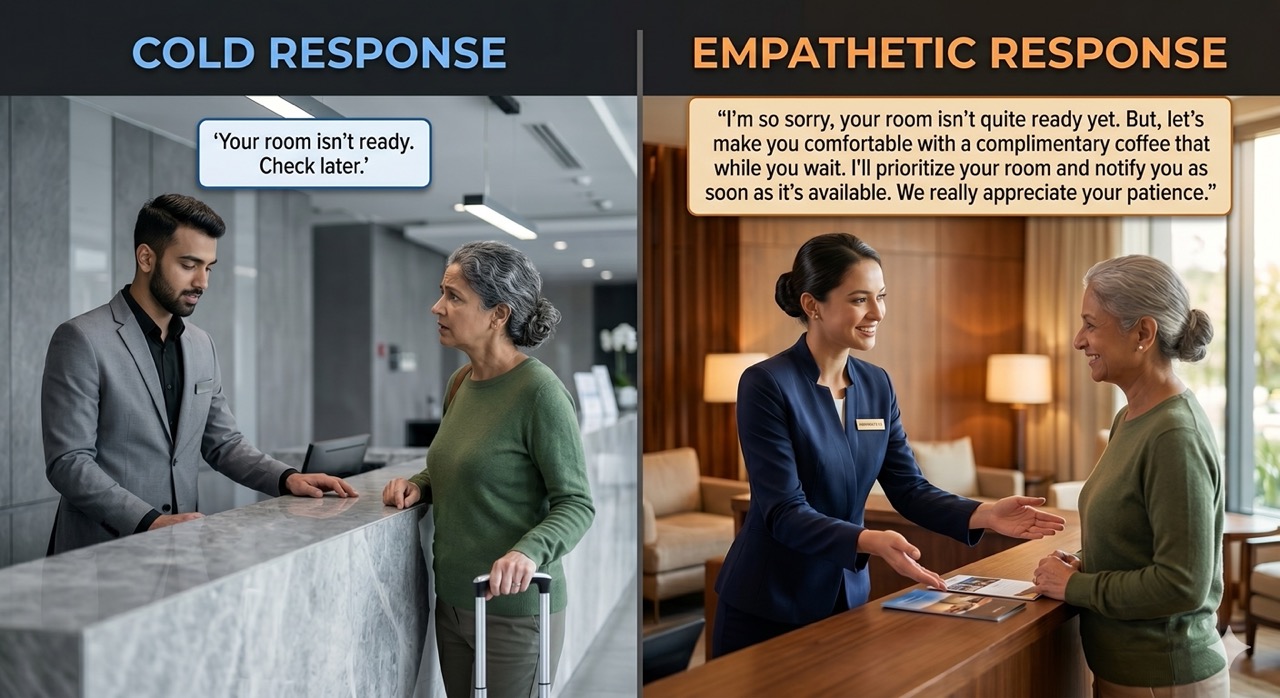
- A room is not ready
- Service is delayed
- A team member makes a mistake
- Multiple guests are waiting at once
At that moment, communication becomes your biggest skill.
Because guests remember experiences.
And experiences are shaped largely through interactions.
Communication Directly Impacts Guest Experience
Think about two different responses from hotel staff.
Response 1:
“Not possible.”
Response 2:
“I understand your concern, sir. Let me check what best can be done.”
Both responses may lead to the same operational outcome.
But the guest experience feels completely different.
That is the power of communication in hospitality.
The right communication:
- Reduces conflicts
- Builds trust
- Creates emotional connection
- Improves guest satisfaction
- Strengthens brand perception
The Industry Is Looking Beyond Technical Skills
Today, hospitality organizations increasingly value:
- Emotional intelligence
- Service attitude
- Communication
- Adaptability
- Team collaboration
- Problem-solving
Because technical skills can often be trained faster.
But communication habits take time to build.
And in an industry where guest perception matters deeply, soft skills become business skills.
The Gap Between Education and Industry Expectations
Many hospitality students spend years preparing for exams but very little time preparing for:
- Real conversations
- Guest interactions
- Conflict handling
- Professional speaking
- Workplace communication
This is one of the reasons why students often feel underconfident during internships or placements.
The hospitality industry does not only need knowledgeable professionals.
It needs professionals who can apply knowledge confidently in real situations.
Communication Is Also Career Growth
Strong communication does not just help at entry level.
It influences:
- Leadership opportunities
- Promotions
- Team management
- Guest handling
- Sales ability
- Cross-functional coordination
In hospitality, professionals who communicate effectively often become more visible, dependable, and trusted within organizations.
The Future of Hospitality Requires Human Skills
Technology and AI are changing hospitality operations rapidly.
But one thing remains irreplaceable:
Human connection.
Guests may use apps to check in.
But they still remember:
- Warm conversations
- Genuine empathy
- Helpful recommendations
- Calm problem-solving
- Personalized service
And all of this comes from communication.
Final Thoughts
Marks are important.
Knowledge is important.
Technical skills are important.
But hospitality has always been — and will continue to remain — a people-first industry.
And in a people-first industry, communication is not an “extra skill.”
It is a career skill.
At Encovate, we strongly believe hospitality learning must move beyond theory and focus on application, confidence, communication, and real-world readiness.
Because ultimately, hospitality is not just about serving guests.
It is about connecting with people professionally and meaningfully.
Originally published May 21, 2026
On a mission to shape a generation of hospitality professionals who don’t just learn—but deliver.
GET IN TOUCH
ADDRESS:
2nd Floor, NASSCOM 10000 Start-up Warehouse, 27th Main Rd, 1st Sector, HSR Layout, Bengaluru, Karnataka 560102
Phone: +91-9113602426
Email: [email protected]
© Copyright 2026 Encovate Solutions Pvt Ltd.